Balinese spa treatments are not only popular for beauty and skin rejuvenation, but also for helping the body and mind feel more relaxed. Many tourists in Bali choose this type of relaxation after long trips, tiring activities, or simply when they need a peaceful moment to unwind and release stress.
Known as one of the world’s most relaxing wellness treatments, the Balinese spa combines gentle massage techniques, calming aromatherapy, and a soothing natural atmosphere. But how exactly Balinese spa help release stress and anxiety? Find out more in this article.
The Stress Tourists Carry Into Bali and Why It Is Different
When talking about Bali, many tourists come to the island with the expectation that they can truly take a break from the pressures of big-city life, work, and other daily responsibilities. They often imagine a peaceful island atmosphere, beautiful nature, and spiritual experiences that can help them heal, relax, and calm their minds.
However, in reality, many travelers still carry stress and mental burdens from their previous routines. Whether it is work-related pressure, emotional exhaustion, burnout, or a fast-paced lifestyle that keeps them constantly connected to the digital world, these feelings do not simply disappear once they arrive in Bali.
In some cases, the stress can even feel more noticeable after a long journey, especially when expectations do not fully match reality. Instead of finding complete tranquility, some tourists end up in overcrowded destinations such as Canggu or Seminyak, where traffic, crowds, and busy surroundings can still feel overwhelming and exhausting.
Moments like these often make travelers realize that their body and mind are not fully relaxed yet, even while staying on an island known for its beauty and vibrant experiences. Relaxation activities such as Balinese spa treatments can become a comforting escape, helping visitors restore balance, recharge emotionally, and enjoy a calmer state of mind during their holiday in Bali.
What Balinese Spa Actually Is and Where Its Healing Logic Comes From
Balinese spa is a traditional Balinese massage therapy that combines ancient healing techniques such as acupressure, deep tissue massage, and aromatherapy to promote deep relaxation. Using a combination of gentle movements and firm pressure, this treatment helps release muscle tension while restoring the body’s natural energy flow.
More than just a regular spa treatment, a Balinese spa is known as a holistic healing experience that focuses on overall well-being. The therapy blends gentle stretching, skin rolling, deep tissue techniques, reflexology, and calming aromatherapy to help the body and mind feel more balanced, refreshed, and relaxed.
Originating from Bali’s traditional healing culture passed down through generations, Balinese spa has also been influenced by Indian Ayurveda and traditional Chinese medicine. This combination creates a wellness practice that aims to restore harmony between the body, mind, and spirit.
The Philosophy of Sekala Niskala and Why the Spa Environment Is Not Just Decoration
Balinese spa is deeply rooted in the philosophy and beliefs of Balinese Hindu culture, especially the concept of Tri Hita Karana. This core philosophy teaches the importance of harmony between three relationships: humans and God, humans and nature, and humans with one another.
To achieve this balance, Balinese spa treatments are designed to restore harmony not only physically (sekala), which can be seen and felt directly, but also spiritually (niskala), including energy, emotions, and spiritual elements believed to influence human well-being and inner balance.
Because of this philosophy, the spa environment is not created as mere decoration. Every element, from natural aromas, the sound of flowing water, soft lighting, traditional music, flowers, to the use of natural materials, is intentionally designed to create a calming and harmonious atmosphere that supports the overall healing experience.
Bali Usadha: The Ancient Healing System Behind Modern Balinese Spa Practice
Bali Usadha is an ancient traditional healing system derived from sacred Balinese palm-leaf manuscripts known as lontar. These texts contain knowledge about the concepts of health and illness, natural ingredients, herbal remedies, and various healing methods that have been passed down through generations in Balinese culture.
The term Usadha comes from the Sanskrit word ausadhi, which means medicinal plants or healing herbs. This traditional practice combines herbal medicine, spiritual elements, and local Balinese wisdom as part of its healing approach.
The treatments are usually performed by a balian usadha, a traditional Balinese healer who has deep knowledge of herbal recipes, natural ingredients, and traditional healing techniques.
How Ayurvedic, Chinese, and Balinese Traditions Merged Into One Healing Method
Historically, Balinese spa treatments were closely connected to traditional healing practices performed by balian, or Balinese healers. They combined physical massage techniques, prayers, sacred oils, and natural herbal ingredients to help relieve pain, restore energy, and support the body’s overall well-being.
During the 8th and 9th centuries, the arrival of Hindu and Buddhist influences introduced the Ayurvedic Tridosha system to Bali, which focuses on balancing Vata, Pitta, and Kapha. Later, Chinese traders also brought knowledge of meridian therapy and acupressure points.
Over time, these healing traditions blended with local Balinese practices and gradually developed into the Balinese massage techniques that are widely known today.
The Science of How a Balinese Spa Session Dismantles Stress
Balinese spa treatments originally developed from traditional Balinese healing practices and local medicinal traditions. Beyond their cultural and spiritual roots, these techniques also have physiological benefits that can positively affect both the body and mind, especially in helping relieve stress, reduce tension, and promote a deeper sense of relaxation.
How Rhythmic Touch Shuts Down the Fight-or-Flight Response
The rhythmic, flowing movements and moderate pressure used in traditional Balinese massage are believed to help activate the parasympathetic nervous system, also known as the body’s “rest and digest” system. A study conducted by Diego M.A. and Tiffany Field found that moderate-pressure massage techniques can increase vagal activity, helping the body shift from a stressed “fight-or-flight” state into a more relaxed and calming condition.
The Role of Acupressure in Targeting Anxiety-Specific Pressure Points
The acupressure techniques used in Balinese massage work by applying pressure to specific points in the body that are connected to the nervous system and muscle tension. In a study titled “Compression on Trigger Points in the Leg Muscle Increases Parasympathetic Nervous Activity Based on Heart Rate Variability,” researchers found that stimulation on trigger points and acupressure points can help activate parasympathetic activity while reducing anxiety, stress, and emotional tension.
Skin Rolling and the Mechanoreceptor Pathway to Nervous System Calm
One of the techniques commonly used in Balinese massage, known as skin rolling, helps stimulate mechanoreceptors, which are touch-sensitive receptors connected to the nervous system. When these receptors are activated through gentle physical touch, the body responds by feeling safer and more relaxed, helping calm the nervous system and release tension naturally.
How Cortisol Drops and Serotonin Rises During a Single Session
According to a study by Christopher A. Moyer, massage therapy can help reduce cortisol levels, a hormone closely linked to stress, while also increasing serotonin and dopamine, which are associated with feelings of relaxation and happiness. These effects can help the body and mind feel calmer, lighter, and more emotionally balanced even after the massage session is over.
Why Aromatherapy in a Balinese Spa Is a Neurological Event, Not Just a Pleasant Smell
Aromatherapy in Balinese massage spa treatments does more than simply create a calming scent, as it can also affect the nervous system and brain activity. Research suggests that aromatherapy may help lower cortisol levels while increasing relaxing brain waves, which can support emotional balance and help reduce feelings of stress and anxiety.
The Sensory Journey from Arrival to Departure in a Balinese Spa
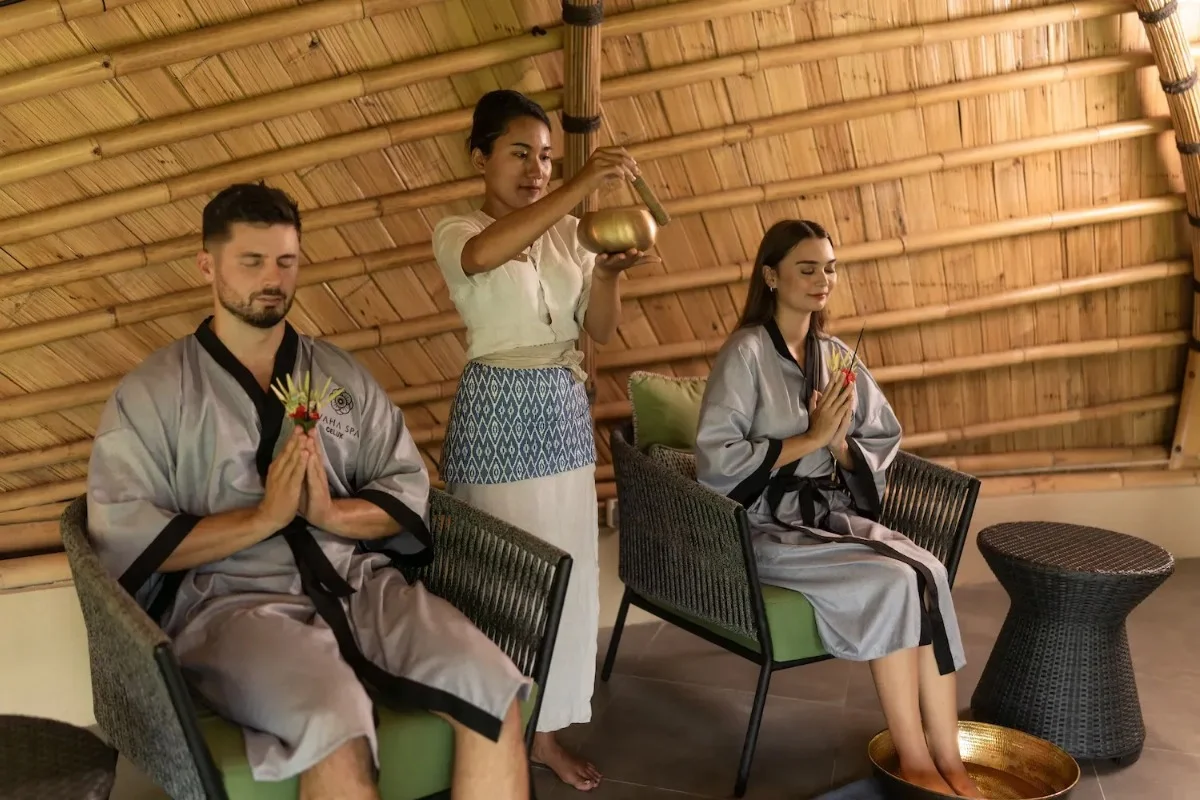
Balinese healing massage offers a holistic wellness experience that is carefully designed with attention to comfort, relaxation, and emotional balance. Many spas in Bali provide personalized treatments, starting from a traditional foot washing ritual before the massage, the selection of oils and calming scents based on your preference, soothing massage techniques, and ending with a peaceful flower bath that helps the body and mind feel refreshed and relaxed.
The Foot Wash Ritual and Its Role in Psychological Transition
Balinese spas often begin the experience with a traditional foot washing ritual before the main treatment starts. More than just a welcoming gesture, this practice helps guests transition from the stress and busyness of daily activities into a calmer and more relaxing atmosphere while also maintaining cleanliness and comfort before the massage session.
The warm water used during the ritual can help improve blood circulation and gently release tension in the feet and leg muscles. This simple yet soothing step helps prepare both the body and mind to feel more relaxed and ready for the full spa experience.
Oil Selection and How Scent Choice Shapes the Emotional Outcome
At the beginning of the treatment, guests are usually offered several oil scent selections to use during the massage session. Common choices include lavender, lemongrass, frangipani, and other natural oils, each with its own distinctive aroma and relaxing benefits for the body and mind.
This selection process is meant to create a more personal and comfortable experience by allowing guests to choose scents they genuinely enjoy. Different aromas can affect mood in different ways, helping guests feel calmer, refreshed, energized, or more emotionally relaxed throughout the spa session.
What Happens Inside the Body During the Treatment Sequence
During the treatment session, the rhythmic movements and gentle pressure used in Balinese massage can help encourage the release of endorphins while reducing stress and cortisol levels, helping the body and mind reach a deeper state of relaxation. Techniques such as kneading, skin rolling, and stroking are also effective in easing muscle tension and relieving stiffness caused by stress, fatigue, or daily physical activity.
The smooth, flowing massage movements may also help improve blood circulation, support the lymphatic system, and assist muscle recovery by helping oxygen and nutrients move more efficiently throughout the body. Meanwhile, the use of essential oils and aromatherapy creates a calming sensory experience that helps relax the mind and reduce emotional tension during the treatment.
The Flower Bath and the Physiological Case for Ending in Water
In many Balinese spa treatments, the session is often concluded with a traditional flower bath after the massage. More than simply a relaxing ritual, the combination of water immersion, floral aromas, and a calming atmosphere can help create a soothing sensory experience that allows the body and mind to feel more relaxed after the treatment.
Research on aromatherapy and bath therapy has shown positive effects on stress reduction, emotional relaxation, and overall mood improvement, particularly when calming scents are involved.
Why Bali Itself Amplifies What the Spa Begins
When experiencing a wellness spa in Bali, the sense of relaxation often comes from more than just the massage treatment itself. Bali’s peaceful atmosphere and natural surroundings also play a big role in making the experience feel deeper, calmer, and more emotionally soothing.
The island is known for its slower pace of life, beautiful landscapes, and spiritual ambiance that help many visitors feel more relaxed and disconnected from the stress of everyday routines. Tropical forests, refreshing beaches, the sound of flowing water and ocean waves, birds singing, the scent of incense, traditional music, and Bali’s open-air architecture all come together to create a calming sensory experience that naturally supports relaxation after a Balinese spa session.
Combined with Bali’s strong healing and wellness culture, these elements help the body and mind feel more balanced, peaceful, and refreshed even long after the treatment has ended.
Matching Your Type of Stress to the Right Balinese Spa Treatment
Balinese spa massage offers a wide range of benefits, and each treatment technique can often be tailored to specific needs or concerns that guests want to address. Whether the goal is to reduce stress, relieve muscle tension, improve circulation, or simply feel more relaxed, different spa treatments may provide different effects for the body and mind.
Here are some Balinese spa treatments that may be suitable for different concerns and wellness needs.
Travel Fatigue and Jet Lag: Which Techniques Help Most
Traditional Balinese Massage can be a great treatment for relieving jet lag and travel fatigue after long flights or exhausting journeys. The combination of gentle deep pressure, skin rolling, and flowing massage movements helps improve circulation, ease muscle stiffness, and make the body feel more refreshed and relaxed after hours of travel.
If your feet feel sore, swollen, or heavy from walking or sitting too long during the trip, foot reflexology can also be a comforting option. By focusing on pressure points in the feet, this treatment may help reduce tension, improve blood flow, and restore energy while helping the body feel more balanced after traveling.
Muscular Tension from Activity: The Case for Deep Tissue and Herbal Compress
While spending time in Bali, activities such as hiking, surfing, long walks, gym workouts, or exploring the island all day can sometimes leave the body feeling tired, sore, and tense. Muscle stiffness often builds up from repetitive movements or intense physical activity, especially around the legs, back, neck, and shoulders.
For this type of discomfort, deep tissue massage is often recommended because it uses firmer pressure to target deeper muscle layers and help release built-up tension. Many Balinese spa treatments also combine the massage with herbal compress therapy, where warm herbal bundles are gently pressed onto the body to help relax stiff muscles, improve circulation, and create a soothing sensation that supports muscle recovery after physical activities.
Emotional Anxiety and Cognitive Overload: When Energy Work and Aromatherapy Lead
Long journeys, busy schedules, emotional pressure, and the habit of constantly staying connected to the digital world can sometimes leave the mind feeling overloaded, even while spending time on a tropical holiday in Bali.
This feeling often shows up as overthinking, difficulty relaxing, poor sleep quality, emotional exhaustion, or simply the sense that the mind never truly slows down after too much activity and stimulation. Even while on vacation, many people realize that their body may be resting, but their mind is still carrying stress from everyday life.
For this reason, many travelers choose Balinese spa treatments that focus on relaxation, gentle touch, energy balancing, and calming aromatherapy. The soothing massage movements, combined with essential oil aromas and a peaceful spa atmosphere, can help calm the mind, release emotional tension, and slowly guide the body into a more relaxed and comfortable state.
What to Do in the 24 Hours After a Balinese Spa Session
After experiencing a Balinese spa session that may involve deep tissue massage, traditional Balinese techniques, body scrubs, or flower baths, the next goal is to let your body fully relax and recover over the next 24 hours. This recovery period allows the body to maximize the relaxing effects of the treatment while helping muscles and the nervous system gradually return to a more balanced state.
Things to Do Within 0–2 Hours After the Session
- Drink the ginger tea usually provided by the spa to help keep your body hydrated and support the body’s natural recovery and detox process.
- Avoid leaving the spa in a rush. Take around 15–20 minutes to relax in the lounge or resting area so your body can slowly adjust after the treatment.
- Try not to shower immediately after the session, especially if you received an oil treatment or herbal body scrub. Allow the oils and natural ingredients to stay on the skin for a while so the nourishing effects can absorb more effectively.
Things to Do Within the Next 24 Hours
- Drink plenty of water to help the body flush out metabolic waste, reduce muscle soreness, and prevent lightheadedness after the massage.
- Wear loose and comfortable clothing so your skin can breathe properly, especially while the body still feels moisturized from the oils and spa products.
- Light walking or gentle stretching can help the body feel more comfortable, but it is best to avoid intense exercise or physically demanding activities right after the treatment.
- Feeling “blissfully tired” after a spa session is completely normal, as the body is entering a deeper state of relaxation and recovery.
- If you continue with your skincare routine afterward, use a gentle cleanser to avoid irritating the skin after exfoliation or facial treatments.
When a Balinese Spa May Not Be the Right Choice
Balinese spa treatments are designed to support wellness and relaxation, but there are certain health conditions where massage or spa therapy may not be suitable or may potentially worsen symptoms. For this reason, it is important to be aware of your current health condition and inform your therapist before starting any treatment.
Some conditions that are generally not recommended for massage or spa treatments include:
- Parasitic infections such as scabies or head lice.
- Fungal infections such as athlete’s foot, ringworm, jock itch, or other fungal skin infections.
- Chronic conditions in active flare-ups such as scabies or shingles.
- Bacterial infections including active tuberculosis, strep, staph, or MRSA infections, impetigo, and bacterial conjunctivitis (pink eye).
- Viral infections such as viral conjunctivitis, chickenpox, or shingles.
Most spas also provide a brief consultation before the treatment begins to ensure safety and comfort. If you have a medical condition and unsure whether Balinese spa treatments are appropriate for you, it is always best to consult with the spa staff or therapist beforehand.
What Bali Teaches About Stress That the Spa Simply Makes Possible to Feel
Bali offers a wide variety of wellness spas across the island that you can visit to help reduce stress and unwind from fatigue. Balinese spa treatments provide a meaningful way to release physical and mental tension, with soothing touch techniques and a calming atmosphere that can make your holiday feel more serene, memorable, and restorative.
If you are looking for a relaxing spa experience, Svaha Spa offers a calming healing experience designed to help release stress and refresh both body and mind. You can consult your needs and book your session in advance for a smoother and more personalized experience.